
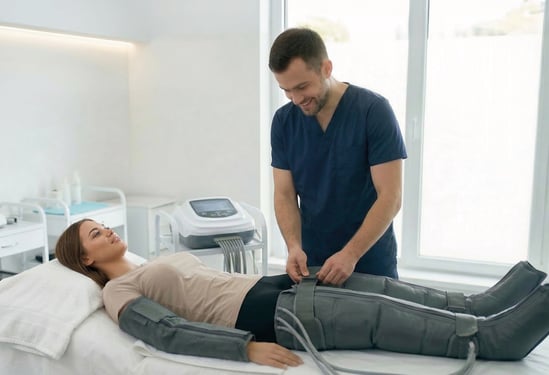
Pressure therapy has established itself asa valuable complementary tool in rehabilitation and physiotherapy services. This treatment, based on the application of controlled air pressure on different parts of the body, not only provides aesthetic benefits, but also plays a relevant role in the functional recovery and general well-being of patients.
What is pressotherapy?
Pressure therapy is a therapeutic technique that uses pneumatic devices to exert sequential pressure on extremities and other body areas. Through sleeves or boots that inflate and deflate in a controlled manner, the lymphatic and circulatory system is stimulated, favoring the drainage of liquids and the elimination of toxins.
In the field of physiotherapy, it is integrated as a complementary treatment that enhances other therapeutic approaches.
Applications in rehabilitation and physiotherapy.
Within the Hospiten Tamaragua Rehabilitation Service, pressotherapy is used in multiple clinical contexts, among which the following stand out:
- Edema treatment: especially in post-surgical patients or those with circulatory problems.
- Post-traumatic recovery: helps reduce inflammation after muscle or joint injuries.
- Chronic venous insufficiency: improves venous return and relieves the feeling of heaviness in the legs.
- Lymphedema: is one of the most relevant indications, contributing to lymphatic drainage.
- Sports rehabilitation: it favors muscle recovery after intense physical exertion.
Therapeutic benefits
The incorporation of pressotherapy in physiotherapy programs provides multiple benefits:
- Improvement of blood and lymphatic circulation
Facilitates venous return and stimulates the lymphatic system, reducing fluid accumulation. - Reduction of pain and swelling.
By reducing edema, pressure on the tissues is relieved, which contributes to reduce pain. - Acceleration of recovery
It is especially useful in postoperative processes or after sports injuries. - Feeling of general well-being
Many patients experience a noticeable sense of relaxation after the sessions. - Prevention of complications
Such as thrombosis or fibrosis in certain clinical contexts, always under professional supervision.
Integration into physiotherapeutic treatment
It is important to emphasize that pressotherapy does not replace other physiotherapy techniques, but acts as a complement within a personalized treatment plan. Its application should be assessed by a physiotherapist, who will determine the most appropriate intensity, duration and frequency according to the patient's needs.
Conclusion
Pressure therapy represents an effective tool in the field of rehabilitation and physiotherapy. Its ability to improve circulation, reduce inflammation and accelerate recovery processes makes it an increasingly used therapeutic resource.
Properly integrated into an individualized treatment plan, it can make a significant difference in the evolution and quality of life of patients.
This article is an English translation generated with AI from the original Spanish content. While we review content for clarity, the information is provided for general informational purposes only and should not be considered medical advice. Always consult a qualified healthcare professional for diagnosis or treatment.