Cancer is a disease that brings with it a number of significant challenges in the workplace that, while often unnoticed, have a profound impact on productivity, emotional well-being and the dynamics of the work environment. These invisible challenges affect not only those suffering from the disease, but also their immediate environment, including colleagues and the organization as a whole. For this reason, and given that a large proportion of the cases diagnosed in Spain correspond to people of working age, companies have a responsibility to implement health and wellness measures and protocols that offer comprehensive support both to workers suffering from this disease and to their teams as a whole.
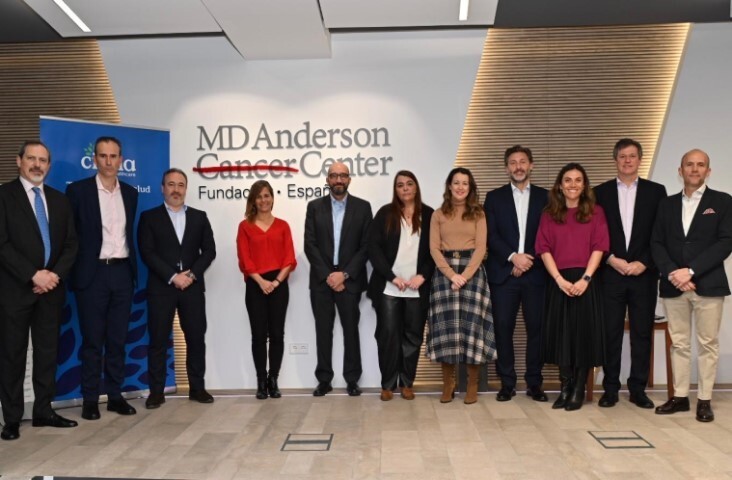
In this context, Cigna Healthcare Spain and MD Anderson Cancer Center Madrid-Hospiten have drawn up the guide "The invisible impact of cancer: support strategies in the workplace". The document was presented today at an event that began with a speech by Dr. Daniela Silva, specialist in Internal Medicine and E-Health Medical Manager at Cigna Healthcare Spain, and Dr. Santiago Gonzalez, medical director of MD Anderson Cancer Center Madrid-Hospiten. Subsequently, two round tables were held to discuss the most representative topics in the guide. The first, entitled "The impact on productivity, stress and wellbeing: the importance of leaders in the management of cancer in the workplace", was attended by Belén Viscasillas, director of Health and Wellbeing at Ferrovial; Amaya Lasa, director of Human Resources Administration at SNGULAR, and José Antonio Toledo, deputy director for Spain at MUFG Bank. The event analyzed the various ways in which cancer affects productivity, stress and employee motivation, as well as strategies to support workers in their treatment and reincorporation process. In addition, the need to train leaders to manage these situations with empathy was highlighted.
The second round table, "Support strategies in the workplace", moderated by Raul Gomez, director of People, Talent and Culture at Hospiten, was attended by Dr. Enrique Grande, head of the Medical Oncology Service at MD Anderson Cancer Center Madrid-Hospiten and Fatima Castaño, psycho-oncologist at the same center; and Jose Morejon, HR Advisor and director of the Masters in Human Resources at Centro de Estudios Garrigues. On this occasion, cancer was approached from a more scientific perspective, analyzing everything from advances in medical treatments and therapies, to the importance of creating inclusive and supportive work environments that favor the reintegration of employees into the workplace, promoting both their physical and psychological wellbeing.
Possible solutions to meet the challenges of cancer
The guide proposes a detailed analysis of the invisible challenges faced by employees with cancer in the work environment. They have to cope with problems such as persistent fatigue, recurrent pain, anxiety and loss of confidence. They also have to deal with work expectations, which often increase their stress level. To this end, the document presents concrete solutions, such as emotional support programs, personalized health plans, adaptations in the workplace, training for leaders and examples of good practices that have already proven to be effective. Although cancer is sometimes perceived as a disease that only affects physical health, its implications go much further and have an impact on the emotional, social and professional levels. Bearing in mind that, in Spain, around 300,000 new cases of cancer are diagnosed every year, of which approximately 60% correspond to people under 65 years of age, most of whom are of active working age, as indicated by the Spanish Society of Medical Oncology (SEOM), the guide suggests the need for specific health and wellness protocols that include the approach to cancer.
Dr. Daniela Silva indicates that "Up to 50% of cancer cases could be avoided by adopting a healthy lifestyle (stop smoking, maintain an adequate weight, engage in regular physical activity, reduce alcohol consumption...) and implementing preventive strategies. When we talk about healthy companies we want to go a step further and create an environment where an employee with cancer knows that his or her well-being-at any level- matters and that his or her team is behind him or her every step of the way. Companies that understand this not only improve the quality of life of their employees, but also strengthen their reputation and performance in the long term.
Dr. Santiago Gonzalez Moreno, medical director of MD Anderson Cancer Center Madrid-Hospiten, points out that "cancer not only has an impact on physical health, but also on the emotional and social wellbeing of people, affecting their productivity and work dynamics. In this sense, companies must take a proactive role, implementing measures that address both the medical and emotional aspects and ensuring an inclusive environment that supports workers throughout the entire process, from prevention to reincorporation into the workplace. The incidence of cancer continues to rise and is estimated to increase by 3.3% this year, and it is therefore crucial that organizations are prepared to provide the necessary support in this regard through flexible work policies, emotional support programs and reintegration strategies."
According to the Ministry of Inclusion, Social Security and Migration, 45% of people diagnosed with cancer do not have a progressive reintegration process at work. This shows that, although cancer is a reality that affects thousands of employees, most companies still do not have a plan to manage its impact. In this sense, the guide stresses the need to adopt a comprehensive approach to accompaniment that covers all phases of the process, from prevention to reincorporation into the workplace.
"When an employee is diagnosed with cancer, the challenge goes far beyond the purely medical part. It is a reality that impacts emotional, social and professional well-being, and has a scope that affects not only the employee, but also everyone around him or her," says Amira Bueno, Human Resources Director at Cigna Healthcare Spain. "It is not enough to adapt schedules or functions; it is necessary to build a corporate culture in which workers feel psychological security with respect to the preservation of their jobs, that they feel supported, understood and, above all, accompanied in all phases of the disease. This involves ensuring adequate access to psychological and medical support programs, awareness-raising among leaders, and progressive reincorporation measures to facilitate their adaptation".
With this guide, Cigna Healthcare Spain and MD Anderson Madrid-Hospiten reinforce their commitment to promoting more inclusive and healthy work environments. Its aim is to provide companies with a practical tool that fosters a work environment that is inclusive, resilient and prepared to face the challenges associated with cancer, contributing to employee wellbeing and organizational success.
The guide "The Invisible Impact of Cancer: Supportive Workplace Strategies" is available for download via this link.
This article is an English translation generated with AI from the original Spanish content. While we review content for clarity, the information is provided for general informational purposes only and should not be considered medical advice. Always consult a qualified healthcare professional for diagnosis or treatment.