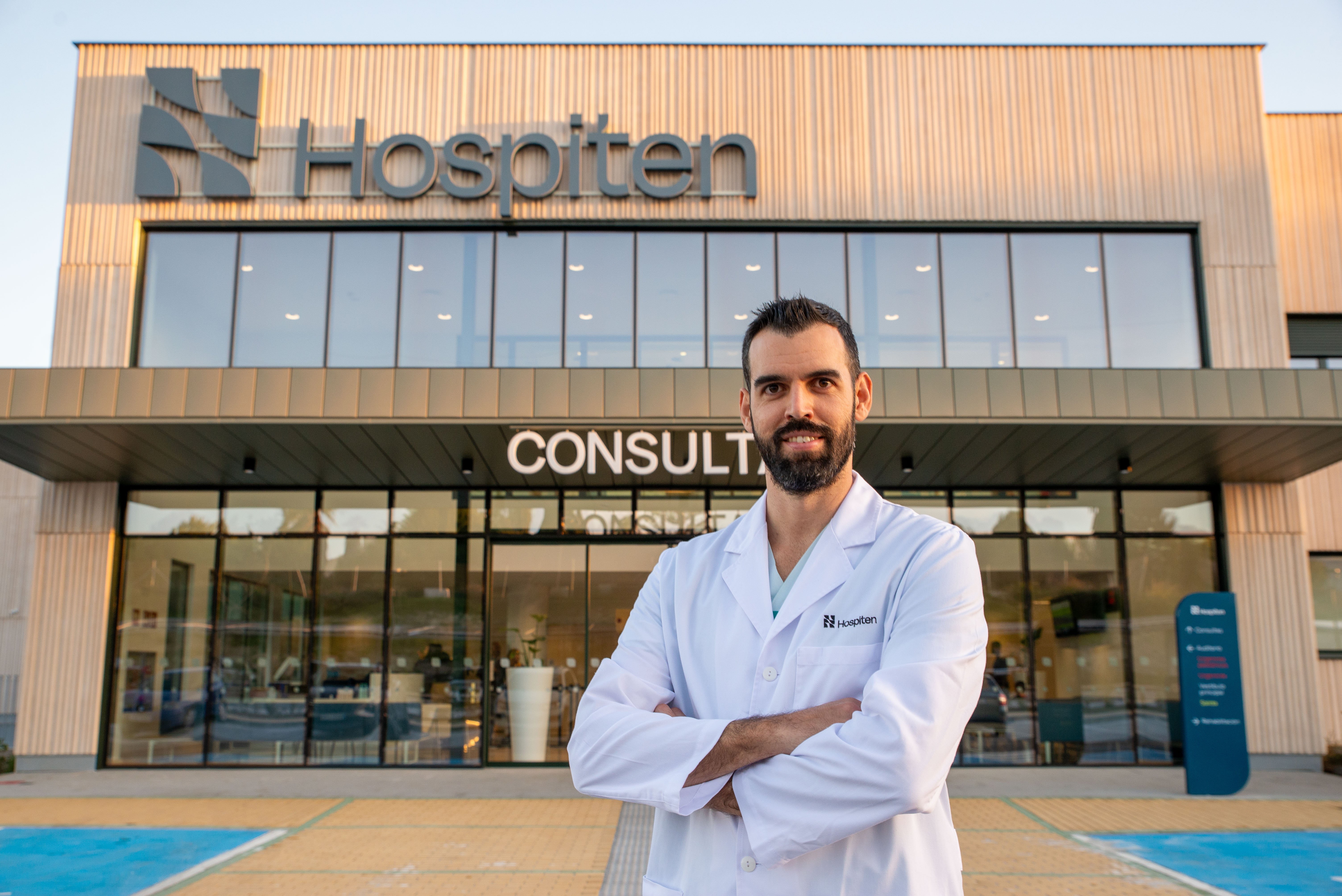
Endoscopic surgery is a minimally invasive technique that allows treating different spinal pathologies through an incision of less than one centimeter, with the support of a high-definition camera and specific instruments.
Unlike traditional surgery, this technique minimizes the impact on the patient's anatomy, minimizing tissue damage: "Endoscopic spine surgery allows us to resolve certain pathologies with much less surgical aggression, while being very respectful of the patient's anatomy," explains Dr. Javier Guerrero, head of the Spine Unit at Hospiten Estepona Hospital. In addition, there are different endoscopic approaches that are selected according to the pathology, the location of the lesion and the symptoms, since each patient requires an individualized indication.
Types of approach, benefits and criteria for a safe option
Among the most commonly used techniques is endoscopic interlaminar discectomy, mainly used in lumbar disc herniations, especially in the lower levels of the spine. The transforaminal approach allows access to certain hernias located in the nerve exit zone. Likewise, endoscopic techniques for canal stenosis are indicated in patients with nerve compression caused by narrowing of the lumbar canal, a frequent problem related to aging.
The fact that these interventions are minimally invasive provides important clinical benefits for the patient. The main objective is to solve the problem causing as little tissue damage as possible, which translates into less postoperative pain, less bleeding, less risk of infection and shorter hospital stays. Many patients are able to walk a few hours after surgery and return to their normal activities sooner, depending on their evolution and medical evaluation.
Patients with herniated discs, lumbar stenosis or persistent radicular pain tend to benefit especially from these techniques, constituting a particularly useful alternative when a faster recovery or less surgical impact is sought. "The key always lies in a correct indication and in choosing the right approach for each case," the doctor emphasizes.
To assess whether the procedure is appropriate, prior diagnosis is fundamental: magnetic resonance imaging, CT or X-rays allow the cause to be identified, but they must be interpreted together with the clinical examination and the symptoms. "We don't treat images, we treat people," reminds the specialist.
Endoscopic surgery requires a high level of specialization, with specific training, experience in spinal surgery and continuous training, as well as adequate technology and multidisciplinary teams to guarantee precision and safety. As with any surgery, a specific evaluation must be made for each case, especially when dealing with complex pathologies or deformities that may require conventional techniques. In the medium and long term, in properly selected patients, the results are comparable and even superior in certain aspects to those of traditional surgery, especially in functional recovery and postoperative pain. For those who are afraid of undergoing surgery, Dr. Guerrero emphasizes that today there are different options and that a proper assessment of the alternatives can mean a significant improvement in the quality of life.
This article is an English translation generated with Al from the original Spanish content. While we review content for clarity, the information is provided for general informational purposes only and should not be considered medical advice. Always consult a qualified healthcare professional for diagnosis or treatment