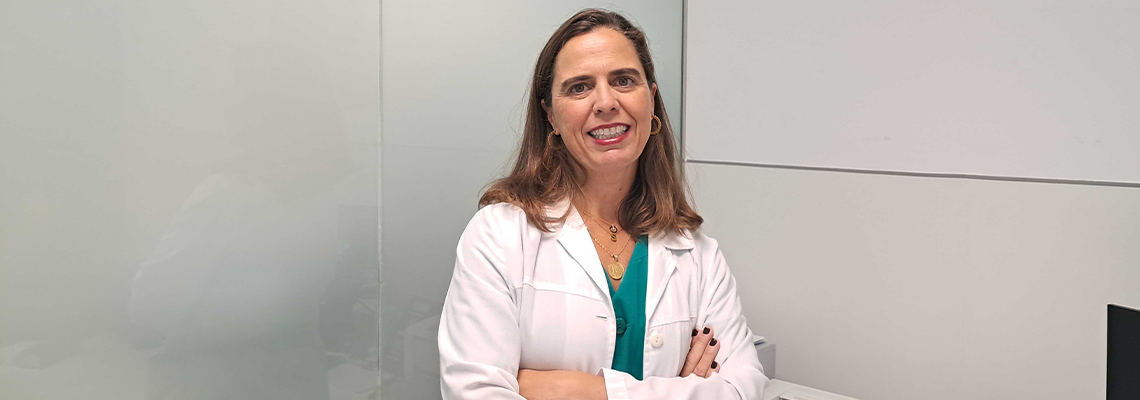
Hospiten highlights the benefits of fusion prostate biopsy for a more accurate early diagnosis. Dr. Sofia Vivancos, a specialist in urology at Hospiten Rambla and Sur University Hospitals, explains that "prostate cancer is currently the third cause of death from cancer in men, so it is very important for men over 45 years of age to have regular check-ups once a year and ensure they get an accurate and early diagnosis, thanks also, in many cases, to minimally invasive procedures such as the fusion prostate biopsy".
"Transrectal prostate fusion biopsy is an advanced outpatient technique used to obtain more accurate prostate tissue samples, especially in cases of suspected prostate cancer. This procedure fuses the images obtained by magnetic resonance imaging with the information provided by ultrasound in real time, generating a virtual prostate model," he explains.
Dr. Sofía Vivancos also explains that this is a minimally invasive procedure that offers great advantages over the traditional biopsy, such as less discomfort, shorter recovery time, fewer infections and complications, no hospital admissions and, in turn, a very high percentage of accuracy. "With this type of biopsy, we have improved the level of detection, reaching nearly 96% of effective diagnoses, leaving behind the false negatives that in many cases were offered by other tests," he points out.
"The first step is to perform an MRI of the prostate, which provides us with detailed images of the prostate gland, including those suspicious areas that could indicate the presence of tumors. Once we have these images, we superimpose them with those of the real-time transrectal ultrasound, which helps us to have a complete virtual map of the prostate that will provide us with very precise information, key to correct diagnosis and treatment," he concludes.
Hospiten recommends prior consultation with the urologist to evaluate the possibility of an MRI or a fusion biopsy if there is clinical suspicion of prostate cancer. In this sense, the use of new technology seeks to improve diagnoses and facilitate the procedure for patients.
This article is an English translation generated with AI from the original Spanish content. While we review content for clarity, the information is provided for general informational purposes only and should not be considered medical advice. Always consult a qualified healthcare professional for diagnosis or treatment.