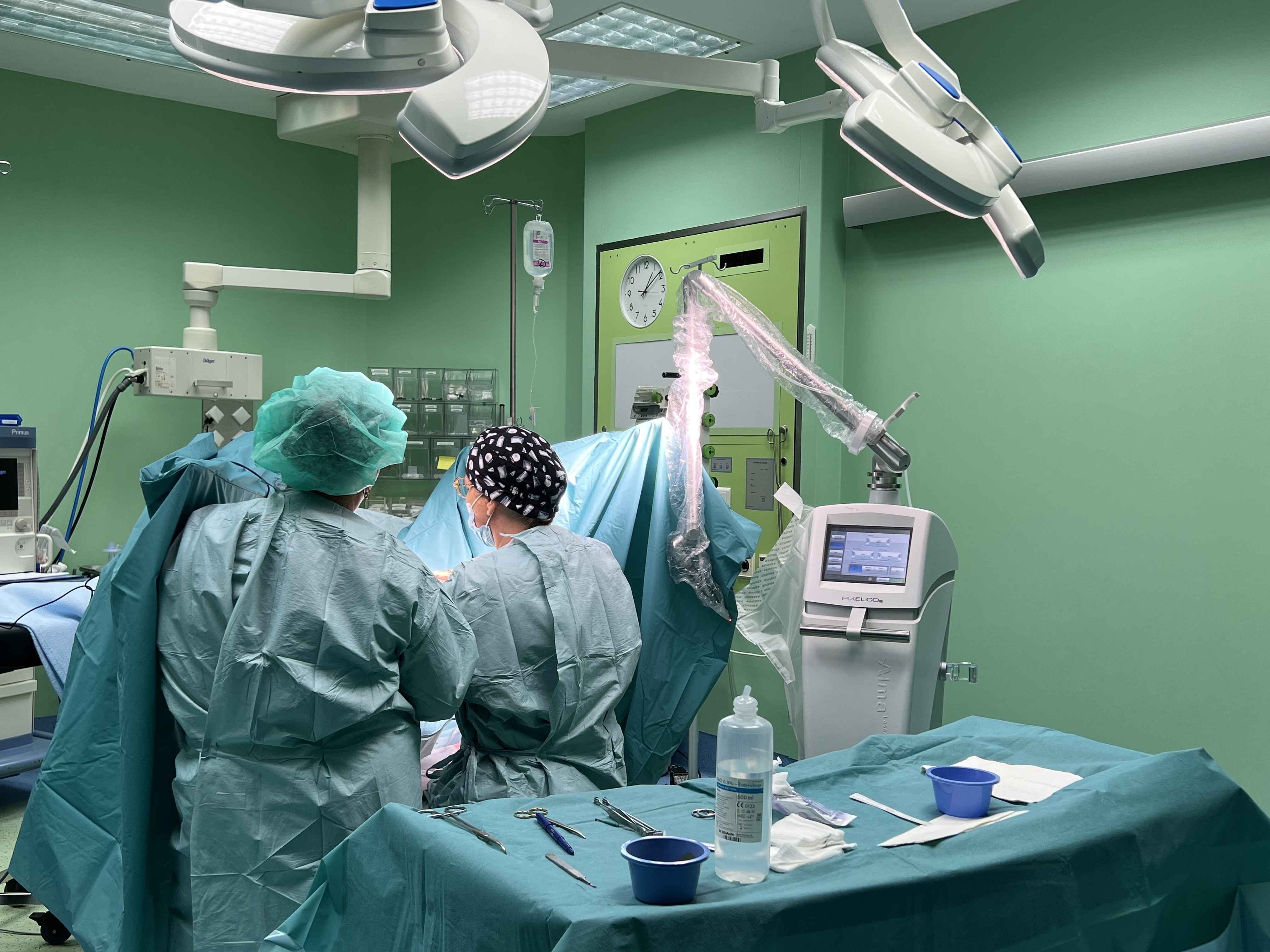
Surgical procedures and laser technology are a safe and effective method to improve the patient's symptoms and quality of life through tissue regeneration and reconstruction.
Symptom improvement is immediate after the first session.
Santa Cruz de Tenerife, April 15, 2025. Hospiten is making progress in the comprehensive treatment of severe vulvar lichen, using a surgical procedure complemented by laser technology to improve the symptoms and quality of life of patients through tissue regeneration and reconstruction.
What is vulvar lichen and how does it affect patients?
Vulvar lichen is a chronic inflammatory skin disease that mainly affects the genital and perianal area of women, although it can also occur in men and children. It is characterized by thinning of the skin itself and its whitish color, which makes it fragile and prone to tears with a tendency to form adhesions. Among the most frequent symptoms are intense itching (especially at night), burning and irritation, pain during sexual intercourse (dyspareunia), changes in vulvar anatomy, fissures, bleeding and recurrent infections.
Dr. Ioana Bodea, specialist in Aesthetic Gynecology and Intimate Surgery at Hospiten Bellevue and Hospiten Sur University Hospitals, explains that the traditional treatment is based on high-potency topical corticosteroids, and second-line calcineurin inhibitors, "However, in many cases, these treatments lose effectiveness over time or are insufficient," she points out.
"The exact cause is unknown, but it is believed that there are autoimmune, genetic and hormonal factors involved". In this regard, the specialist indicates that Hospiten performs a diagnosis based on the clinical evolution and a mandatory vulvar biopsy to "confirm the anatomopathological type of lichen".
Among the different frequent damages of this disease are "interlabial adhesions, as well as those of the cap and the glans clirotidianus, fissures and sclerosis of labial or cap edges, clitoral and/or urethral obstructions that, in severe cases, can make it difficult or impossible to urinate".
What procedures are performed to treat vulvar lichen?
Although in recent years, gynecologic laser treatment, especially the CO2 laser, has emerged as a promising option for the management of lichen vulvae chronicus, a surgical procedure is also performed. This method is performed under regional anesthesia in the operating room and includes debridement of adhesions by minimally invasive needle, accompanied by infiltrations with platelet-rich plasma (PRP) or hyaluronic acid; anatomical correction with special sutures; the use of autologous fat for reconstructive treatments; mesotherapy with PRP or exosomes in the treated area to optimize regeneration and a postoperative adhesion prevention treatment by successive dressings with calcium alginate dressings.
"Treatment of advanced vulvar lichen is a lengthy process that requires multiple outpatient sessions in addition to surgery," he says. The key aspects of recovery depend on each patient's metabolism and immune response, but in general, symptom improvement is immediate after the first session, and the postoperative period includes successive dressings with specialized products to prevent recurrences.
In addition, Dr. Ioana Bodea emphasizes that when applied in a comprehensive and personalized manner, "the treatment offers effective and long-lasting results". At the same time, absolute symptom control and a marked improvement in the quality of life of patients with advanced vulvar lichen is achieved.
"It is essential that the treatment be performed by a professional specialized in regenerative gynecology and with experience to ensure the safety and efficacy of the procedure. In addition, it is important to maintain regular medical follow-up to evaluate the response to treatment and make adjustments if necessary," he concludes.
Hospiten reaffirms its commitment to women's health, betting on innovative and safe solutions to treat pathologies that affect the quality of life of many women.
This article is an English translation generated with AI from the original Spanish content. While we review content for clarity, the information is provided for general informational purposes only and should not be considered medical advice. Always consult a qualified healthcare professional for diagnosis or treatment.