Hospiten Sur University Hospital has performed the first clinical procedure in the Canary Islands using Kerecis®, a fish-derived dermal matrix with an intact acellular structure, as part of the treatment for a patient with bilateral hidradenitis suppurativa, a condition that causes small lumps to form under the skin, who had significant skin involvement in both armpits.
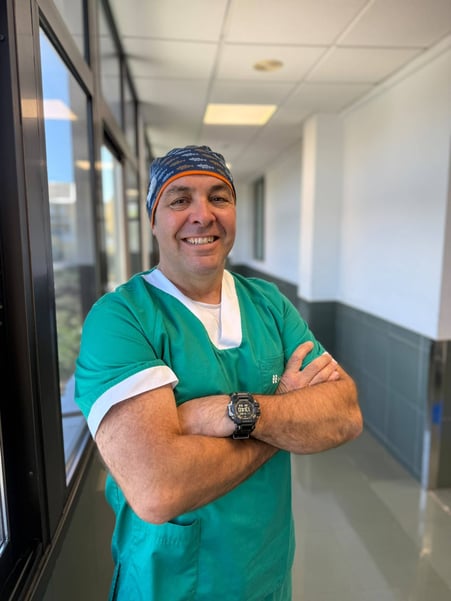
The procedure was performed by the chief of the General and Digestive Surgery Department at Hospiten Sur, Dr. Gianluca Cherubino, and consisted of tissue removal and en bloc excision of the affected area, followed by bilateral application of Kerecis®, tailored to the wound defect.
Kerecis® is made from North Atlantic cod skin processed using the patented EnviroIntact™ process, which preserves its structure and natural lipids, providing a dermal matrix homologous to human skin. Its use aims to provide a scaffold that promotes the natural processes of tissue regeneration and repair.
In this case, the goal is to achieve the formation of new blood vessels and faster epidermal reconstruction, without clinical complications, with the expectation of reducing healing times and the need for dressings, thereby improving the patient’s quality of life.
“My first experience with Kerecis® has been really good; I was especially surprised by how easy it is to handle, adapt, and secure to the wound bed,” explains Cherubino. The specialist considers it a “very promising tool for managing complex wounds,” although he notes that its clinical outcomes will need to be evaluated.
The procedure was performed under general anesthesia using a laryngeal mask and allowed for the treatment of the bilateral skin lesions through resection of the damaged tissue and subsequent placement of the acellular biological dermal substitute.
Following the procedure, the patient underwent regular follow-up visits and wound care, initially every three days, which was later reduced to every two weeks. Two days after the operation, during the first follow-up visits, the patient reported a pain level of 2 out of 10 on the VAS scale.
Her progress will help determine the pace of recovery and the clinical benefit of the technique. Currently, the prognosis is that the patient will be able to gradually resume her normal routine approximately three months after the procedure.
Dr. Cherubino emphasizes that the potential of this technology extends beyond this specific case. “We have this technology at Hospiten Sur and will continue to apply it and expand its uses, which range from large wounds and deep, extensive burns to large fistulous lesions requiring grafting, and many other applications,” he notes.
This case is part of the rollout of this technology in Spain, which is initially being implemented at leading hospitals. According to available information, its use at Hospiten Sur marks the first procedure of its kind performed in the Canary Islands.
Traslated by DeepL.