The hospital group reaffirms that prevention and visual education are the best tools to protect the eye health of the entire population and guarantee good visual quality in the future.
Santa Cruz de Tenerife, December 9, 2025. Hospiten stresses the importance of taking care of visual hygiene, especially in the age of screens. Prolonged exposure to electronic devices has become a daily habit among the population, both at work and at home.
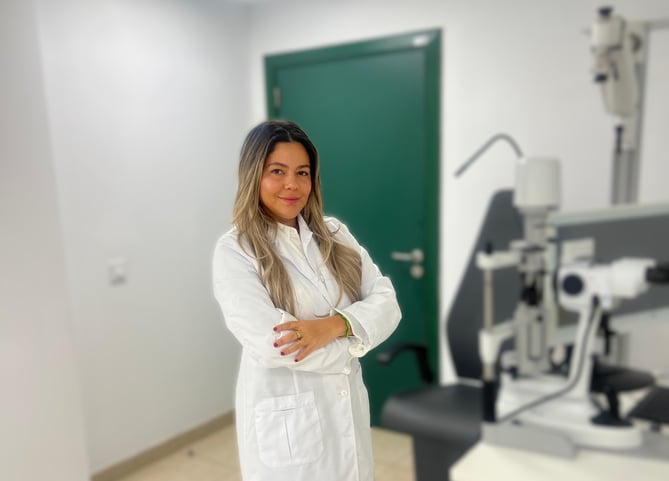
The continued use of electronic screens may be related to an increase in cases of visual fatigue, as well as other eye disorders. In this regard, Dr. Glenda Espinosa, ophthalmologist at Hospiten Bellevue University Hospital, points out that an increase in the so-called computer vision syndrome has been detected in people of all ages.
"Among the most common symptoms are dry eyes, blurred vision, eye irritation, headaches, a feeling of heaviness in the eyelids and difficulty in maintaining concentration. These effects are largely related to the lack of visual rest and continuous overexposure to screens without adequate protective measures," explains the specialist.
For this reason, Dr. Espinosa recommends taking care of visual hygiene, "which is the set of habits and care aimed at preventing visual fatigue and protecting eyesight from the overexposure to electronic devices that we live with nowadays". Likewise, the ophthalmologist insists on "the need to regulate exposure times, encourage frequent breaks and promote activities that involve distant vision and contact with natural light".
Thus, it is necessary for the population to adopt a series of habits to mitigate the negative effects of the intensive use of screens; every 20 minutes of screen use, it is necessary to rest for 20 seconds looking more than 6 meters away; use screens with good resolution, maintain uniform lighting and avoid reflections; place the devices between 50 and 60 cm from the eyes and at a height slightly lower than the line of sight, as well as the use of artificial tears.
In addition, Dr. Espinosa recommends "ensuring that children and adolescents spend at least two hours outdoors to stimulate visual development and that the population should have regular ophthalmologic check-ups, especially children from the age of three, provided there is no family or personal history of eye pathologies".
Hospiten reaffirms the need to maintain visual hygiene should not be considered optional advice, but a necessity in the digital era. Prevention and visual education are the best tools to protect the eye health of the entire population and guarantee good visual quality in the future.
This article is an English translation generated with AI from the original Spanish content. While we review content for clarity, the information is provided for general informational purposes only and should not be considered medical advice. Always consult a qualified healthcare professional for diagnosis or treatment.