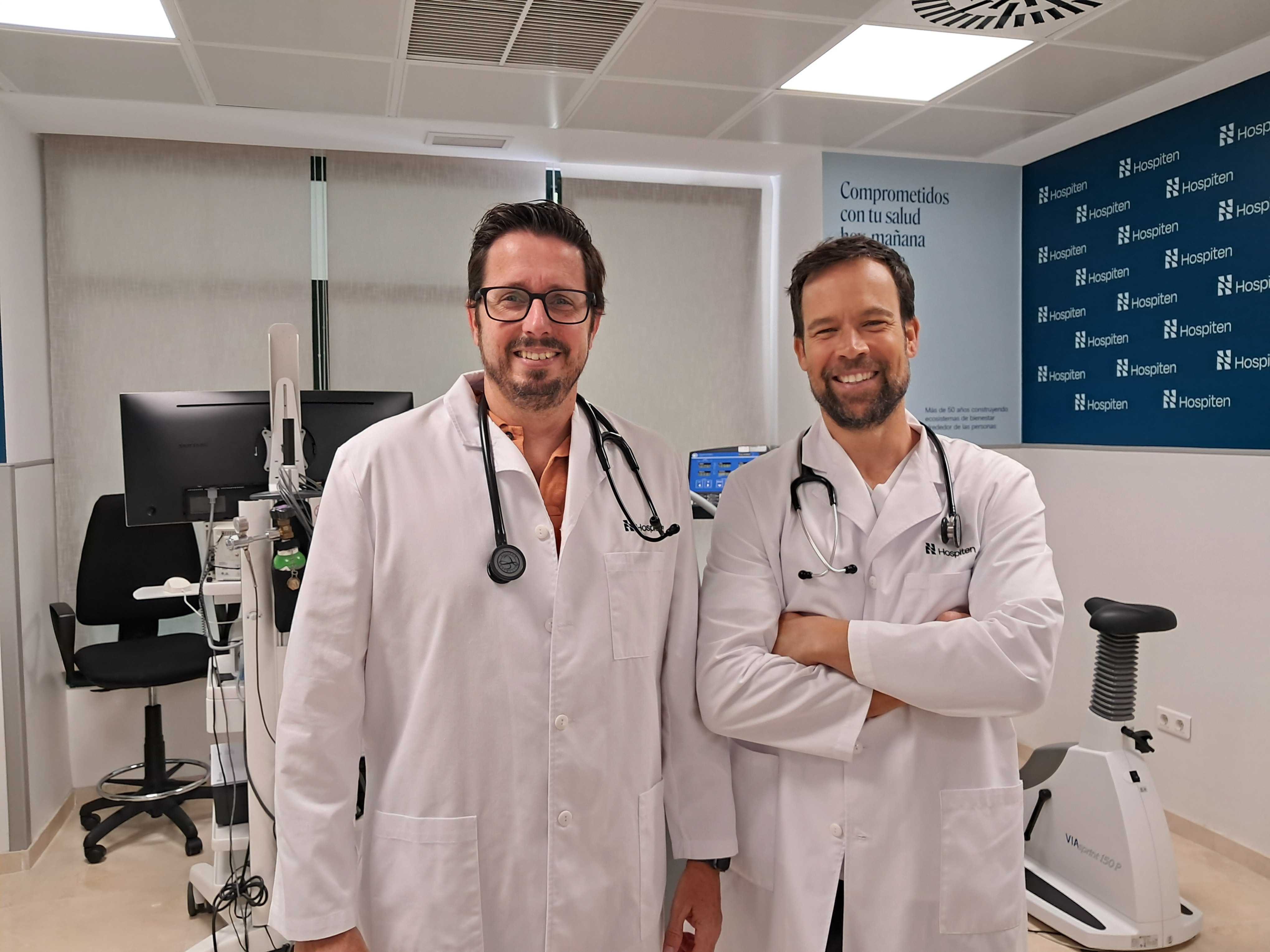
Hospiten incorporates a new Pediatric Cardiology Unit to reinforce prevention at an early age at Hospiten Rambla, Bellevue and Sur University Hospitals.
Cardiovascular health is not just a matter for adults. Dr. Carlos Rubio-Iglesias, specialist in pediatric cardiology at Hospiten Rambla University Hospital, stresses that cardiac health checks in childhood are key. He assures that "cardiovascular screening allows, from an early age, the prevention of potential complications of heart diseases that have not been previously diagnosed and may go unnoticed", such as hypertrophic and arrhythmogenic cardiomyopathies, or the anomalous origin of the coronary arteries, among others.
Hospiten Rambla, Hospiten Bellevue and Hospiten Sur University Hospitals have recently set up the Pediatric Cardiology Unit to bring the diagnosis and control of heart disease in children to the whole island of Tenerife. The unit is staffed by Dr. Carlos Rubio-Iglesias, at Hospiten Rambla University Hospital, and Dr. Javier Fernandez Sarabia, at Hospiten Bellevue and Hospiten Sur University Hospitals, specialists in Pediatric Cardiology, who have extensive experience in the integral approach to cardiovascular diseases in children.
This check-up or screening consists of a series of non-invasive tests that do not cause any discomfort and are carried out on an outpatient basis. These tests are carried out both in the adult population and in children, especially if they exercise.
Dr. Rubio-Iglesias explains that "there is no specific cut-off age from which diagnostic tests are necessary, because it depends on multiple factors: osteomuscular development, the sport practiced and its intensity, history of risk and warning symptoms, etc. For this reason, it is necessary to individualize in all cases".
He also states that "the aim of cardiac screening for sports practice should be prevention, in order to prevent a previously undiagnosed disease from manifesting itself with serious symptoms". In this way, he points out that "the appropriate preventive measures can be taken to limit these complications".
Cardiovascular screening consists of a series of medical procedures that are performed on an outpatient basis. Firstly, an in-depth study of the medical history is carried out, in which personal and family history of cardiovascular disease is analyzed, as well as the warning symptoms that may lead us to suspect that a child is suffering from heart disease. Secondly, a cardiovascular physical examination is performed. Finally, the basic complementary tests come into play: a baseline electrocardiogram, which provides information on electricity and heart rhythm, and a color Doppler echocardiogram, which increases diagnostic capacity by studying cardiac structure and function and identifying diseases that might otherwise go unnoticed.
Similarly, Dr. Rubio-Iglesias emphasizes that "in the event that any abnormality is detected, further tests may be necessary, such as a stress test, a cardiac MRI or a cardiac CT scan, among others," all of which are available at our Pediatric Cardiology Unit. The specialist also points out that "cardiac problems that can hinder the practice of sports are fortunately quite infrequent, so diagnostic tools must be applied with sense and moderation, because there will always be a potential problem of false positives if they are used indiscriminately", which can unjustifiably alert families.
In this sense, Hospiten reiterates the need for accurate and timely cardiological diagnosis, in order to avoid the risk of complications if there is no prior detection.
This article is an English translation generated with Al from the original Spanish content. While we review content for clarity, the information is provided for general informational purposes only and should not be considered medical advice. Always consult a qualified healthcare professional for diagnosis or treatment