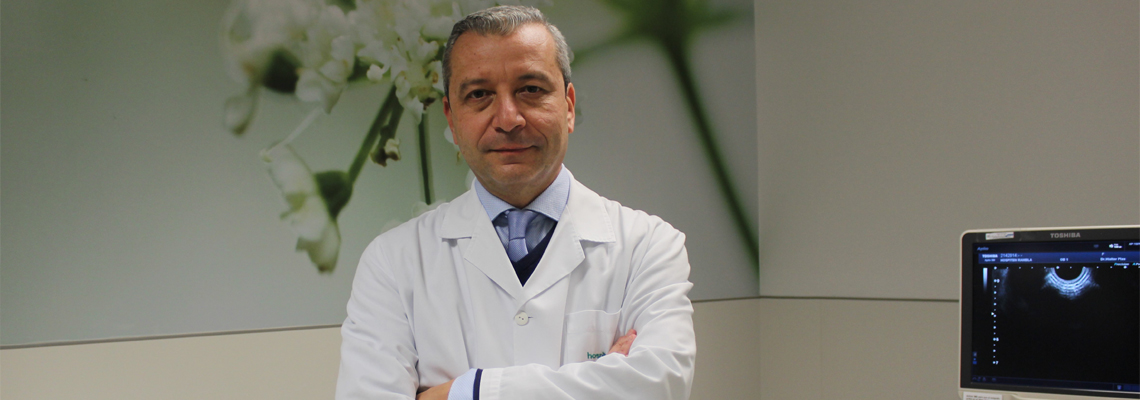
Hospiten, through the Fetal Medicine Unit, is making progress in prenatal diagnosis. Thanks to technological advances, diagnoses and the way in which fetal problems are treated have evolved significantly. Some of the most important advances include equipment with much higher resolution, with images that have significantly improved in quality and detail.
Dr. Walter Plasencia, head of the Fetal Medicine Unit at Hospiten Rambla and Hospiten Sur University Hospitals, points out that these images allow precise visualization of the fetal anatomy. "This facilitates the identification of malformations and other anomalies," he says. It is now possible to detect many congenital anomalies in the early stages of gestation, between 11 and 13 weeks, something that would have been unthinkable a few years ago.
"Another important advance has been the improvement in Doppler studies, which allow a detailed evaluation of blood flow in the fetus and placenta, providing key information on fetal health and well-being," he adds. In addition, Dr. Plasencia highlights the progress in noninvasive prenatal diagnosis through free circulating DNA studies. "These laboratory techniques allow screening for chromosomal problems, such as Down syndrome (trisomy 21) and other trisomies, with a higher detection rate than any previous screening," he explains.
"This method analyzes the fetal genetic material present in the mother's blood, which makes it possible to reduce the number of invasive procedures. In addition, recent advances make it possible to screen for other genetic diseases or syndromes that can affect the health of the future newborn," he adds.
As for treatment, Dr. Plasencia highlights the improvements in the diagnostic capacity of obstetric ultrasound, which now offers greater precision and a more detailed volume of information on the fetus and placenta. "This approach allows for more effective treatments, focused on the areas most relevant to each patient's pathology," he comments.
The specialist also explains that modern equipment makes it easier to obtain much sharper and more detailed images. "This makes it possible to accurately visualize fetal structures and measure blood flow in the placenta, umbilical cord and fetal vessels, helping in the diagnosis of problems such as placental insufficiency, growth retardation and cardiac malformations," he points out.
"New ultrasound systems have improved the detection of structural and genetic abnormalities, with greater accuracy and at earlier stages of pregnancy," he adds.
Dr. Walter Plasencia points out that the Fetal Medicine Unit at Hospiten screens for different complications from the first trimester of gestation and this, in many cases, improves the perinatal outcome, reducing the percentage of pregnancies with different complications. "This offers future parents greater peace of mind and confidence during gestation and also improves the prognosis of many problems that may appear during gestation, which translates into a positive impact, both in the short and long term," he concludes.
This article is an English translation generated with Al from the original Spanish content. While we review content for clarity, the information is provided for general informational purposes only and should not be considered medical advice. Always consult a qualified healthcare professional for diagnosis or treatment.